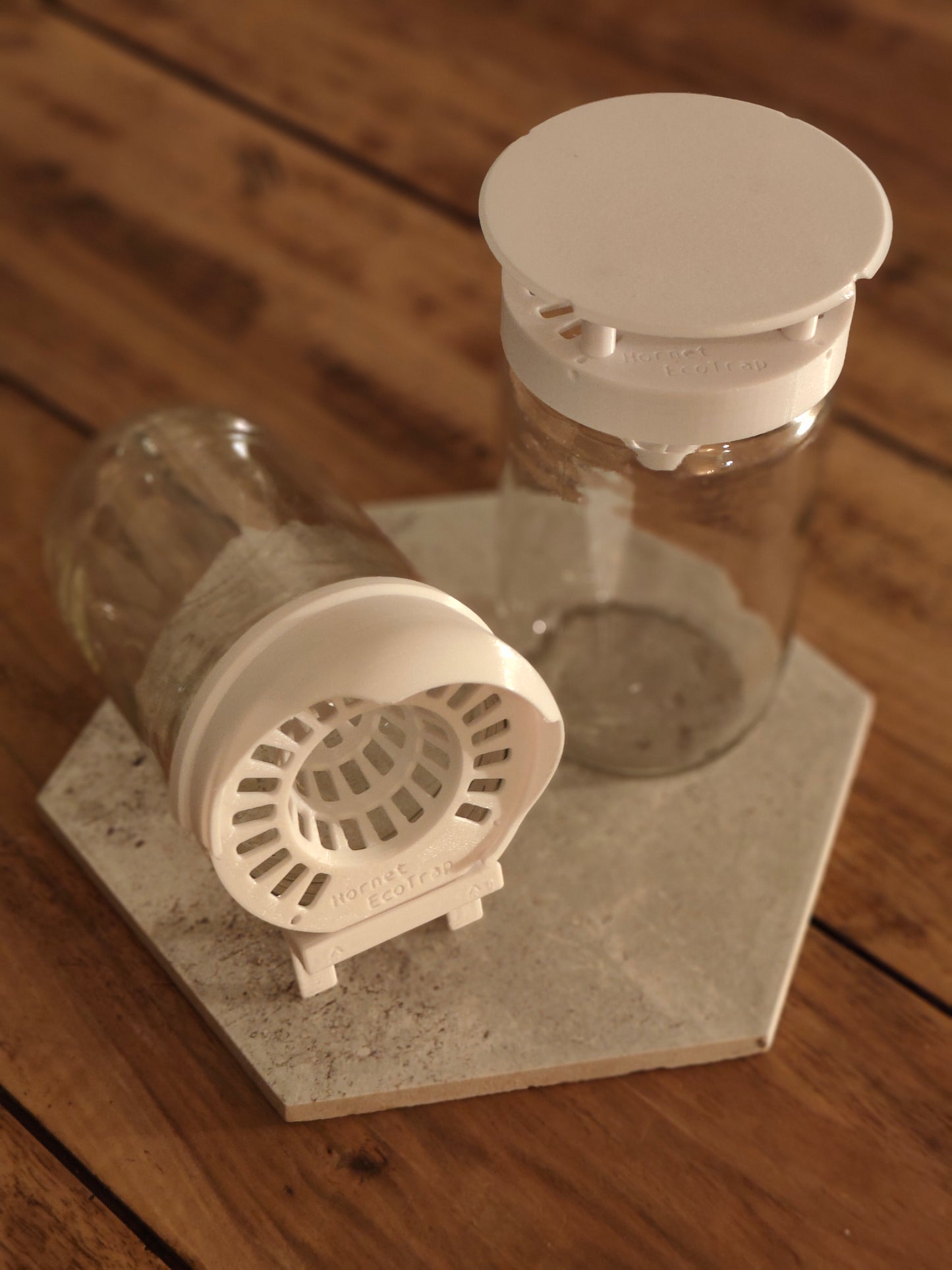
Selective hornet trap for winegrowers
In vineyards, the presence of the Asian hornet is becoming an increasingly visible problem, particularly in late summer and during the grape harvest. Attracted by ripe fruit and human activity, the hornets move around the rows of vines, harvesting areas, and farm buildings.
Impacts of the Asian hornet on winegrowers and winemakers
The Asian hornet poses a risk to the safety of teams , a source of stress for seasonal workers, and an organizational challenge for vineyards . Implementing a suitable trapping solution allows for preventative action and secures work areas.
-
Disruption of work in the vineyard rows
The repeated presence of hornets around the harvesting and transport areas is causing stress among the teams. Some harvesters are hesitant to approach certain areas, which can slow down the harvest and complicate work organization.
-
Risk of nesting near agricultural buildings
Asian hornets can build their nests in trees near fields, sheds, or storage buildings. This proximity increases the risk of incidents during repeated passage of farm workers or machinery.
-
Damage to the estate's image among visitors
For wineries open to the public (wine tourism, tasting rooms), the presence of Asian hornets around reception areas can negatively impact the customer experience. It can create a feeling of insecurity and affect the winery's image of professionalism and quality.
-
Organizational stress and employer responsibility
As an employer, the winemaker has a responsibility for the safety of their teams. The presence of Asian hornets in work areas can become an additional source of concern during peak periods, particularly during the grape harvest.
Hornet EcoTrap protects your know-how
The Hornet EcoTrap helps reduce the presence of Asian hornets around vineyards and work areas. By limiting their activity near the rows of vines and during the harvest, it helps ensure the safety of the teams and maintain more peaceful working conditions. It's a simple preventative solution to protect your vineyard throughout the wine season.
The advantages of trapping for a winegrower
Trapping Asian hornets is a practical solution for limiting their presence throughout the winegrowing season. Fewer hornets mean healthier vines and a more peaceful harvest.
Securing work areas during the grape harvest
By reducing the pressure of hornets in the rows of vines and around the areas where the bunches are laid down, trapping promotes a more serene and less stressful working environment for seasonal workers and employees.
Preventing the establishment of nests near plots of land
Used before the season, particularly in spring, trapping helps limit the establishment of new colonies near the vineyard. This reduces the risk of having to manage an emergency situation in the middle of the wine season.
Preserve the public's experience and the image of the estate
For estates open to the public, limiting the presence of hornets around tasting and sales areas helps to offer a more pleasant experience to visitors and to preserve the professional image of the vineyard.
A responsible approach that is easy to implement
The Hornet EcoTrap integrates easily into the farm's layout without disrupting agricultural activities. When used judiciously, it helps control the Asian hornet while respecting the environment and local biodiversity.
Hornet EcoTrap
Trap for asian hornet - Hornet EcoTrap
Share

Where should I place the traps on my vineyard?
-
To be effective, Asian hornet traps must be strategically positioned on the farm, taking into account hornet passage areas and work areas.
Areas to prioritize:
- The edges of plots and hedgerows, where hornets naturally circulate.
- The areas surrounding agricultural buildings (sheds, wine cellars, storage areas) are often frequented by hornets attracted by smells and human activity.
- The passage areas between plots , particularly near the paths used by the teams and the machinery.
Areas to avoid:
- Work areas that are very busy during the grape harvest , so as not to attract hornets to the heart of the activity.
- The immediate surroundings of public reception areas (tasting cellars, terraces), in order to limit any nuisance to visitors.
- Areas exposed to strong winds, which reduce the effectiveness of the trap.
Best installation practices:
Install the traps at eye level, in quiet and visible areas to facilitate monitoring of captures and maintenance of the bait. Positioning them on the periphery of sensitive areas creates a buffer zone , reducing the presence of hornets in the work and reception areas of the property.
- The edges of plots and hedgerows, where hornets naturally circulate.
Frequently Asked Questions
Does the Asian hornet pose a real danger during the grape harvest?
Yes, the harvest season often coincides with a peak in Asian hornet activity, attracted by ripe grapes and sweet juice. Their repeated presence in the vineyards increases the risk of stings for the teams, especially during the harvesting and transport of the bunches. This can disrupt the smooth running of the operation and generate stress for the harvesters.
Is trapping effective in securing a vineyard?
Trapping helps to locally reduce the presence of Asian hornets around sensitive areas of the property. When properly positioned around the perimeter of fields and buildings, traps create a buffer zone that limits hornet movement into work areas. This is a useful preventative measure, to be combined with monitoring for nests near the farm.
At what time of year should traps be installed in vineyards?
Trapping is relevant at two key times: in spring, to limit the establishment of new colonies near the vineyard, and in late summer, to reduce hornet pressure during the harvest. Adapting the installation period allows us to address the seasonal challenges of the vineyard and protect our teams during the most critical times.
Is there a risk that trapping will disturb other beneficial insects in the vineyards?
A selective trap, used with appropriate bait and placed in the right locations, limits the capture of non-target insects. To preserve the biodiversity of the vineyard, it is important to avoid areas rich in pollinators and to regularly check the traps in order to adjust their use if necessary.
Can trapping replace the destruction of a nest present on the farm?
No, trapping does not replace the destruction of an active nest when it is identified on the farm or in the immediate vicinity. Destruction by a professional remains essential to eliminate the colony. Trapping is used as a supplement to limit local infestation pressure and reduce the risk of re-establishment.
Is trapping easy to implement on a vineyard?
Yes, the traps are easy to install and require no special equipment. A few well-chosen placement points around the edges of sensitive areas are enough to start reducing the presence of Asian hornets. This simplicity allows winegrowers to easily integrate trapping into the daily operations of their vineyard.