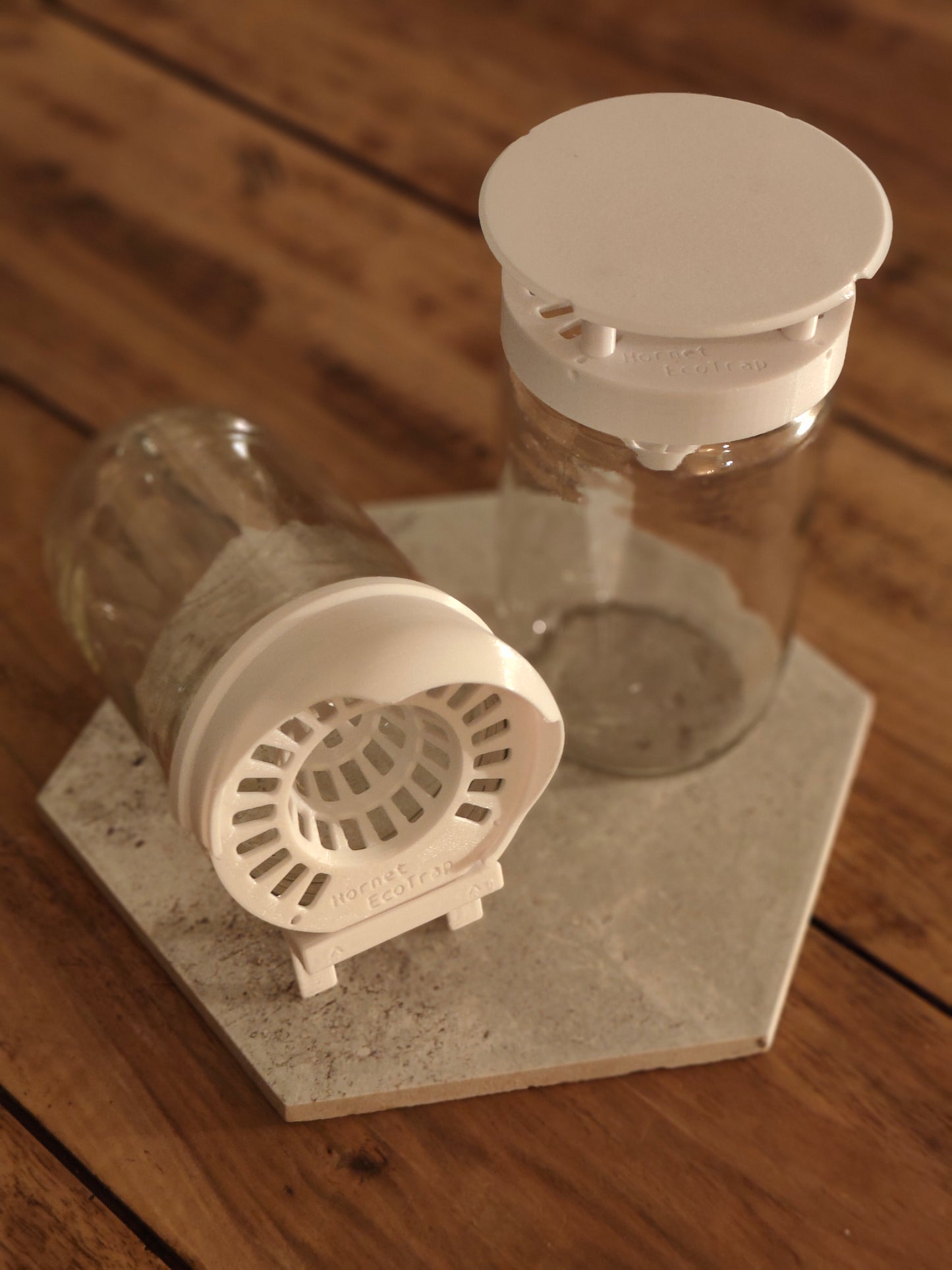
Selective hornet trap for campsites, holiday villages, and gîtes

For tourist accommodation professionals — campsites, holiday villages, rural gîtes, bed and breakfasts — the presence of the Asian hornet is part of daily life. Attracted by wooded areas, green spaces, and human activity, hornets readily settle near outdoor accommodations, precisely when holidaymakers are enjoying the outdoors the most.

A major challenge for customer experience and the safety of holidaymakers

The presence of Asian hornets at a tourist site generates both a health risk for guests and staff, and a commercial risk for the establishment. During peak season, a bad experience can quickly lead to negative online reviews, refund requests, and a damaged reputation for the site.

  • Risk of stings in outdoor areas

    Outdoor spaces — swimming pools, playgrounds, terraces, tent or mobile home pitches, barbecue areas — are the primary areas affected by the presence of Asian hornets. These areas, frequented by families with children, can become the scene of unintentional encounters and potentially serious stings, especially in the event of a collective attack.

  • Nesting in trees and buildings on the site

    Shady campsites, tree-lined holiday villages, and gîtes ruraux offer ideal conditions for nests: large trees, building frames, outdoor shelters, and sheds. A nest discovered in high season necessitates evacuating an area, urgently calling in a professional, and sometimes rehousing guests.

  • Impact on customer satisfaction and online reputation

    A customer stung or simply bothered by the presence of hornets will share their experience on review platforms (Google, Booking, Tripadvisor, Gîtes de France). A few negative reviews related to a hornet problem can permanently affect the visibility and commercial attractiveness of an establishment.

  • Operator's liability and safety obligation

    As an accommodation professional, you have a duty of care towards your guests and employees. The confirmed presence of an Asian hornet's nest on the premises requires a quick and documented response, otherwise you could be held liable in the event of an incident.

The Hornet EcoTrap: a discreet ally for your tourist season

The Hornet EcoTrap selective trap allows accommodation professionals to reduce the pressure of Asian hornets on their site, by acting preventively from spring onwards. Discreet and effective, it blends seamlessly into the natural environment of a campsite, holiday village or rural gîte.

Benefits of trapping for a tourist accommodation site

Implementing a trapping strategy early in the season means anticipating rather than reacting. It is also an argument to highlight to your environmentally conscious clients who are concerned about their family's safety.

Secure holidaymakers' living and relaxation areas

By installing traps on the outskirts of swimming pools, playgrounds, restaurants and terraces, you limit the movement of hornets in the most frequented areas. Your customers can enjoy their holidays more peacefully, without fearing stings for themselves or their children.

Anticipate before the summer peak

Spring trapping allows you to catch founding queens before they create new nests on your site. This is a simple preventative measure that significantly reduces the risk of having to deal with an emergency situation in the middle of the tourist season.

Showcasing your environmental approach

More and more vacationers are choosing their accommodation based on eco-responsible criteria. The Hornet EcoTrap, manufactured in France using 3D printing with PETG filament of French origin, and selective towards pollinators, naturally fits into a Green Key, European Ecolabel, or Accueil Vélo approach, and strengthens your CSR positioning.

A simple, effective, and discreet solution

The Hornet EcoTrap can be set up in less than 5 minutes, with no specific equipment required. Its design (French 3D printing, glass jar) gives it a much more discreet and qualitative appearance than commercially available plastic traps.

  • Key areas to focus on

    For maximum effectiveness without impacting the customer experience, place your traps in areas where hornets naturally circulate, but away from the busiest areas:

    • Site edges and wooded borders, which are natural corridors for hornets.
    • Periphery of technical buildings (storage rooms, workshops, garbage rooms) often attractive due to odors.
    • Vicinity of hedges and isolated trees, conducive to nest installation.
    • Buffer zones between surrounding natural areas and vacationers' living spaces.
  • Areas to avoid

    To avoid attracting hornets to the heart of the site's activity:

    • Playgrounds, swimming pools, paddling pools, and bathing areas.
    • Terraces, restaurants, snack bars, and dining areas.
    • Tent pitches, mobile homes, or accommodations directly.
    • Main entrance and customer reception areas.
  • Best installation practices

    Install the traps at head height in easily accessible locations for your technical teams, to simplify the monitoring of catches and the replenishment of bait. A network of traps around the perimeter of the site creates a protective buffer zone, intercepting hornets before they reach the holidaymakers' living areas. Remember to set up trapping as early as February-March, well before the start of the season.

Frequently Asked Questions

Is the Asian hornet really a risk for my campsite or gîte?

Yes, especially for sites located in rural, wooded, or peri-urban areas. The Asian hornet is now present throughout almost all of France and thrives in environments that offer both food (insects, fruits, sugars) and nesting sites (trees, frameworks, shelters). Outdoor accommodations often combine these two conditions.

When should traps be installed at a tourist site?

Spring (February to May depending on the region) is the most strategic period: trapping foundress queens prevents new nests from being established on your site before the peak summer season. A second trapping phase at the end of the season can also be relevant to limit the dispersal of future queens into the next season.

What to do if a nest is discovered in the middle of tourist season?

Never intervene yourself: a threatened nest triggers a collective and aggressive reaction from hornets. Call a certified professional for destruction, and immediately cordon off the area to prohibit access to customers and staff. Communicate transparently with affected vacationers. Preventive trapping in the spring remains the best strategy to avoid this type of emergency situation.

Can I order multiple traps to equip my entire site?

Yes, sliding scale prices are applied from 3 traps purchased (-5%) and 6 traps (-8%). For large sites (multi-hectare campsites, holiday villages, gîte networks), do not hesitate to contact us to discuss a solution adapted to your project and the number of traps required.

Is trapping compatible with an eco-label approach (Green Key, European Ecolabel)?

That's right. The Hornet EcoTrap is selective: it allows pollinators (bees, butterflies, bumblebees) to escape while retaining Asian hornets. Made in France with PETG filament of French origin, it is fully in line with a CSR and environmental approach, and can be highlighted in your communications with customers sensitive to these issues.

How to communicate the presence of traps to customers?

Transparency is your best asset. You can mention your prevention approach in your welcome booklet, on your website, or through discreet signage: "For your comfort, this site implements a selective trapping system for Asian hornets, respectful of local biodiversity." This is a reassuring and valuable message that highlights your professionalism.

How can we involve residents in the municipal initiative?

Several levers exist to engage residents: communication campaigns (municipal bulletin, website, social networks), free or subsidized distribution of traps, educational workshops with schools, partnerships with local associations and beekeepers. A nest reporting platform can also be set up to centralize feedback from the field.