


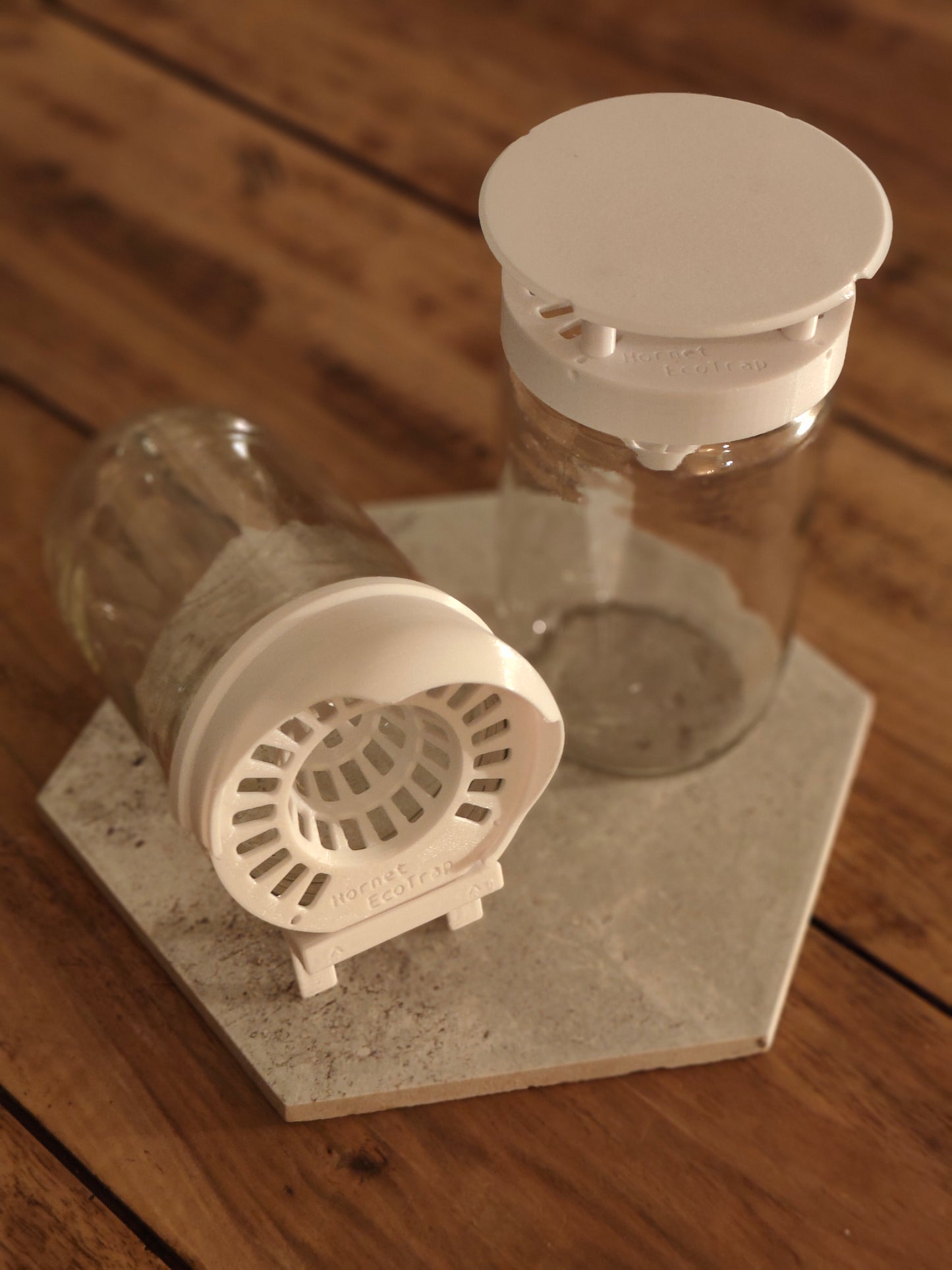
Fonctionne parfaitement !

Bonjour Jean-Pierre,
Un immense merci pour ce retour, et surtout pour la photo qui vaut mille mots. Voir un piège plein, en situation réelle, ça nous fait énormément plaisir.
Bonnes captures à vous, et belle saison !
L'équipe Hornet EcoTrap
Bonjour, nous sommes très satisfaits des pièges à frelon très efficace
Merci
Aucun frelon. Main nous n'en avons pas cette année pour l'instant
Bonjour,
Merci pour votre retour, et bonne nouvelle déjà : pas encore de frelon asiatique chez vous cette année. Dans ce contexte, un piège vide est exactement ce qu'on souhaite. Il joue son rôle de sentinelle, prêt à alerter si la situation évolue.
La pression en frelons varie d'une année à l'autre, et la fenêtre fin d'été/automne (les ouvrières) reste à surveiller. Pensez à renouveler votre appât tous les 10 à 15 jours pour qu'il garde son pouvoir attractif.
Belle saison,
L'équipe Hornet EcoTrap
Les pièges sont difficiles à visser sur un bocal !
Le pas de vis n’est pas bien fait mais on y arrive en persévérant !!
Le support pour les coucher est trop léger, les bocaux roulent au moindre coup de vent !
Le principe est bon mais pas encore au top
Bonjour,
Merci pour ce retour détaillé et constructif !
Sur le pas de vis : le piège est calibré pour le standard TO82, mais nous savons que certains bocaux ont des tolérances légèrement différentes selon les fabricants. Si vous pouvez nous indiquer la marque que vous utilisez, on regardera de près.
Sur le support qui roule au vent : il y a en réalité un sens d'installation à respecter pour assurer la stabilité. Les pieds doivent être positionnés à l'arrière, avec le chevron visible vers l'avant. Ainsi orienté, le support tient bien en place et doit normalement résister au vent. Nous allons tout de même engager une réflexion pour améliorer encore cette pièce.
Bonne journée
L'équipe Hornet EcoTrap
Pas très efficace pour le moment !!!!
Bonjour Serge,
Merci pour ce retour. Un « pour le moment » est finalement une bonne nouvelle. Cela veut dire que la pression actuelle du frelon asiatique dans votre région est assez faible.
L'efficacité d'un piège anti-frelon dépend de plusieurs facteurs indépendants du piège lui-même : le principal étant la recette d'appât (le bon dosage entre bière brune, vin blanc et sirop fait toute la différence).
Nos 7 erreurs les plus courantes et leurs solutions, dans un article complet : https://hornet-ecotrap.com/blogs/le-blog-de-buzette/mon-piege-ne-capture-rien-7-erreurs-courantes-et-leurs-solutions
N'hésitez pas à nous écrire via le formulaire de contact du site interne avec quelques détails sur votre installation, on prendra le temps de vous accompagner.
L'équipe Hornet EcoTrap
Quel bonheur d’être équipé de ce piège simple écolo, et qui se fond dans le décor. On aborde beaucoup plus tranquillement la belle saison en se sentant protégés des frelons asiatiques, même si on n’en a pas encore vu, la façon dont les autres insectes sont attirés par le piège, tout en pouvant en ressortir, nous nous rassure totalement !
Bonjour Karen,
Merci beaucoup pour votre avis !
Pas encore de frelon asiatique, c'est plutôt une bonne nouvelle. Le piège fait office de sentinelle au cas où :)
Belle saison à vous, et n'hésitez pas à nous donner des nouvelles sur les réseaux sociaux quand vous ferez votre première capture !
L'équipe Hornet EcoTrap
Mon piège est installé depuis bientôt 2 mois . Il fait bien le job et surtout il est pratique et très facile d’utilisation .
C’est top
Bonjour,
Merci beaucoup pour ce retour ! La simplicité d'usage était l'un de nos objectifs principaux à la conception, votre retour nous fait particulièrement plaisir. Ravis qu'il fasse le job et que votre appât fonctionne.
Bonnes captures à vous,
L'équipe Hornet EcoTrap
Très bien !
La seule chose qui manquerait serait une attache : ça n’a pas été évident de trouver une attache/fil de fer du bon diamètre, adapté pour l'extérieur et supportant le poids.
Bonjour Ella,
Bonjour [Prénom],
Merci pour votre avis et pour la suggestion, c'est exactement le type de retour qui nous aide à améliorer le produit.
Trouver la bonne attache peut effectivement être plus compliqué qu'il y parait, et nous réfléchissons à l'intégrer dans le kit pour vous éviter cette recherche. En attendant, du fil de fer galvanisé de 1,5 à 2 mm fonctionne très bien, il est résistant aux intempéries et largement suffisant pour le poids du piège.
Merci encore pour votre confiance,
L'équipe Hornet EcoTrap
Le piège Hornet EcoTrap me paraît biencher pour ce qu'il est, 2 pièces plastique qui pourraient être plus robustes. De plus, s'il est efficace, le filtre n'est pas aussi sélectif que cela, d'autres insectes que les frelons asiatiques y sont piégés
Bonjour,
Merci pour ce retour détaillé.
Sur le prix : derrière ces « 2 pièces plastique », il y a une fabrication entièrement française (matériau et main d'oeuvre). C'est un choix assumé : pas de moule chinois, pas de production délocalisée. À 9,90 €, on reste dans la fourchette basse du marché pour ce niveau d'exigence mais on entend que la perception puisse être différente, et c'est légitime.
Sur la robustesse : votre retour rejoint d'autres remontées. Nous travaillons actuellement sur une version améliorée du piège qui viendra remplacer l'actuelle d'ici 2 à 4semaines.
Sur la sélectivité : aucun piège n'est sélectif à 100%. Notre grille est calibrée pour que les insectes non ciblés (abeilles, papillons, petits pollinisateurs) puissent ressortir librement. Mais certains, attirés par l'appât fermenté, choisissent d'y rester. C'est un comportement que la grille ne peut pas contraindre. Le bon réglage de l'appât (notamment la part de vin blanc, qui repousse les abeilles) reste la meilleure manière d'affiner la sélectivité.
Merci pour votre confiance et pour ces remarques constructives,
L'équipe Hornet EcoTrap
Le service commercial est bon mais la qualité du piège et notamment du chapeau est fragile. Déçu.
Bonjour,
Merci pour votre retour, et merci pour le mot sur notre service, ça nous touche.
Le toit de protection anti-pluie est effectivement plus fragile que la tête de piège. C'est un accessoire et il doit toujours être enlevé avant de visser ou dévisser la tête de piège. S'agissant d'un problème de casse à la première utilisation, nous vous avons immédiatement remplacé la pièce.
Votre retour n'est pas tombé dans le vide pour autant. Nous travaillons actuellement sur une nouvelle version du toit pour le renforcer mécaniquement et réduire ce type de fragilité. Les premiers retours utilisateurs comme le vôtre sont précieux pour orienter ces améliorations.
N'hésitez pas à nous tenir au courant de vos prochaines captures !
L'équipe Hornet EcoTrap
Depuis mon piège juste 2 guêpes mais aucun frelon
Bonjour,
Merci pour votre retour. Dans 9 cas sur 10, quand un piège reste vide de frelons, ce n'est pas le piège qui est en cause mais l'un de ces petits détails qui font toute la différence : un appât mal dosé, un emplacement à ajuster, un timing un peu décalé…
Notre Buzette a justement consacré un article complet à ce sujet, avec les 7 erreurs les plus courantes et leurs solutions : https://hornet-ecotrap.com/blogs/le-blog-de-buzette/mon-piege-ne-capture-rien-7-erreurs-courantes-et-leurs-solutions
L'appât est souvent le premier levier à ajuster. La recette qui fonctionne le mieux au printemps : 1/3 bière brune + 1/3 vin blanc (essentiel, il repousse les abeilles) + 1/3 sirop de cassis ou grenadine. Un peu trop de l'un ou de l'autre, et le mélange n'intéresse plus les frelons. À renouveler tous les 10 à 15 jours.
Si vous avez des questions plus précises sur votre installation, écrivez-nous via le formulaire de contact et on regardera ensemble.
L'équipe Hornet EcoTrap
Pas très efficace. Les petits insectes ne peuvent pas ressortir car ils glissent sur le verre du bocal. De plus, aucun frelon asiatique capturé.
Bonjour Thierry,
Merci pour votre retour.
Sur le verre glissant : c'est une réalité partagée par tous les pièges utilisant un bocal en verre. Notre grille de sortie sélective est calibrée pour laisser passer les insectes de petite taille (abeilles, papillons), mais s'ils tombent dans le liquide, le verre lisse complique leur sortie. L'astuce qui fonctionne le mieux : insérer une brindille ou un bâtonnet le long de la paroi intérieure pour leur donner un appui. On va le mettre en avant dans nos prochains guides.
Un point essentiel sur l'appât : c'est souvent là que tout se joue. La recette « classique » (bière brune + sirop de fruit + vin blanc) reste la référence, mais le dosage peut varier d'une fois à l'autre. Un peu trop de vin ou de bière, et le mélange devient répulsif pour les frelons. Si vous ne capturez rien après 5 à 7 jours, n'hésitez pas à modifier les proportions, à augmenter la part sucrée (sirop de cassis, de grenadine) ou à changer complètement de base. C'est vraiment un travail d'ajustement, pas une recette figée.
Sur l'absence de capture : un piège vide ne veut pas toujours dire piège inefficace. La pression en frelons asiatiques varie énormément d'une commune à l'autre, et la fenêtre de piégeage optimale dépend de la saison (fondatrices au printemps, ouvrières en été/automne). Si vous le souhaitez, écrivez-nous via le formulaire de contact : on regardera ensemble votre installation, l'appât utilisé et la période pour optimiser vos prochains piégeages. Peut-être que cela vous permettra de capturer vos premiers frelons.
L'équipe Hornet EcoTrap
Pas terrible
Bonjour Bernatte,
Merci pour votre avis. Nous sommes désolés que le piège n'ait pas répondu à vos attentes.
L'efficacité d'un piège anti-frelon dépend de plusieurs paramètres : la période d'installation, la recette d'appât (une légère variation de recette peut le rendre non attractif), l'emplacement (1,5 à 2 m du sol, à proximité d'un point d'attraction).
Nous serions ravis d'échanger avec vous pour comprendre votre installation et vous accompagner. Écrivez-nous via le formulaire de contact sur le site.
L'équipe Hornet EcoTrap
J'ai reçu mon colis très rapidement, la mise en place est facile maintenant j'attends les frelons...
Super produit, facile à mettre en place, et d’un bon rapport qualité prix.
Pratique efficace facile d'utilisation
Piège facile à mettre en place sur un bocal et surtout très efficace. Rapidement, quelques frelons asiatiques sont venus se prendre au piège dans le bocal (avec un bon appât maison qui les a bien attiré). Je recommande !
How do I use my Hornet EcoTrap trap?

Jar and bait
1. Prepare
Prepare your attractant by following one of our Asian hornet bait recipes .
Pour the mixture into a suitable jar (see the guide on suitable jars ) and add a paper towel, cotton wool, or wood shavings to the bottom of the jar. This helps prevent insects from drowning.

Hornet EcoTrap head
2. Screw
Simply screw the Hornet EcoTrap head onto the jar as if it were a lid. Depending on the trap model, attach the rain cover or clip on the feet and rain cap .
Find all the step-by-step information in our guides:
- Prepare your trap for capture
- Where should I place my trap to make it as effective as possible?

Hooray for eco‑catching
3. Capture
The bait, once in place, begins to release its attractive scent gradually, mimicking the sweet odors that Asian hornets love.
When the first hornets discover the trap, they naturally draw their companions through their behavior and pheromones. Gradually, the trap becomes a genuine gathering point for Asian hornets: the more hornets arrive, the more effective the bait becomes, ensuring rapid and massive captures.

Re‑arm the trap
4. Empty it and start again
Once full or the bait is exhausted, it is time to renew the trap by getting rid of the hornets and start preparing it again.
The steps to follow are outlined in our guide dedicated to emptying and resetting the Hornet EcoTrap trap .