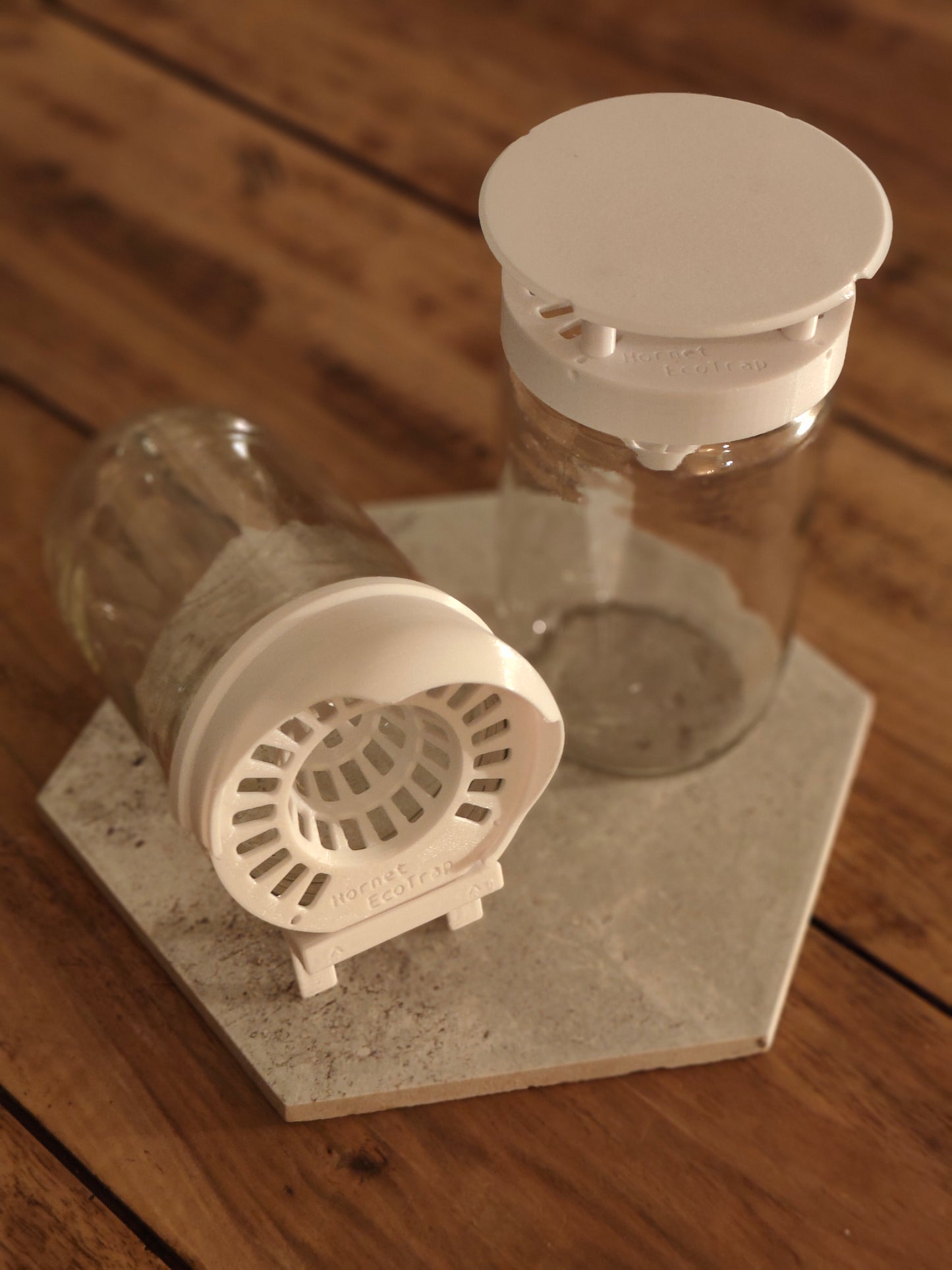
Selective hornet trap for beekeepers

As beekeepers , you are on the front line in the face of the pressure from the Asian hornet on apiaries. Direct predation in front of hives , stress to colonies, decreased honey production… The fight against the Asian hornet has become a major issue for the protection of your bees and the sustainability of your beekeeping operation .

Your hives and bees are under constant pressure

The Asian hornet exerts constant pressure on beehives by hovering in front of the entrance to capture bees. For both amateur and professional beekeepers, this represents a direct economic loss and a risk to the survival of their colonies .

  • Disorganization of bee behavior

    The presence of the Asian hornet in front of beehives causes constant stress to the bees . This pressure disrupts the normal organization of the colony and significantly reduces its daily activity .

  • Decrease in foraging activity

    With the relentless attacks of Asian hornets, bees are limiting their foraging trips , leading to a decrease in the number of active foragers around the apiary. Less foraging means less nectar and pollen brought back to the hive.

  • Decline in honey production

    When foraging activity decreases, the amount of nectar collected drops, which directly translates into a decrease in honey production . For the beekeeper, this situation generates significant economic losses .

  • Gradual weakening of the colony

    The constant pressure from the Asian hornet exhausts the bees and gradually weakens the colony . In the long term, and without protective measures, this weakening can lead to the collapse of the hive .

Protect your bees with the selective trap
Hornet EcoTrap

Trapping Asian hornets is a direct and concrete action to protect the apiary and the bees, complementary to muzzles, electric harps or anti-hornet grids.

The tangible benefits of trapping for a beekeeper

Trapping Asian hornets is a practical solution for reducing the pressure they exert around beehives. When used correctly, it will allow you to better protect your colonies while supporting foraging activity and honey production throughout the season.

Une ruche dans un champs

Reduction of predation pressure around beehives

By capturing some of the hornets present in the immediate environment of the apiary, we reduce the stress suffered by the bees , which allows them to resume a more normal foraging activity .

Indirect protection of honey production

Fewer hornets around the apiary means more active bees, therefore better nectar collection and better overall hive productivity .

une carte d'identité du frelon asiatique

Preventive action in the spring

Trapping queen bees as they emerge from hibernation helps to limit the creation of new nests near apiaries, thus reducing pressure for the entire season.

A tool that complements other protective devices

The Hornet EcoTrap trap easily integrates into a comprehensive apiary protection strategy, without replacing existing devices, but by enhancing their effectiveness.

  • Where should traps be placed around a beehive?

    To be effective, trapping must be strategically positioned:

    • maximum a few meters from the hives
    • in areas where hornets pass
    • in visible and easy-to-control locations


    Good positioning allows you to increase the capture rate while avoiding directly disrupting the activity of bees at the entrance to the hives.

  • An approach compatible with the protection of biodiversity

    Beekeepers are often sensitive to the preservation of pollinating insects and local biodiversity. The use of a selective trap , designed to limit the accidental capture of bees and beneficial insects, makes it possible to reconcile the fight against the Asian hornet with respect for ecosystems . This reasoned approach is now favored in many control programs.

Frequently Asked Questions

How to effectively protect a beehive against the Asian hornet?

Protecting a beehive relies on a combination of complementary methods . Targeted trapping reduces hornet pressure in the immediate vicinity of the hives, while devices such as hornet traps, anti-hornet screens, or electric harps limit direct attacks at the hive entrances. Combining these solutions helps to better preserve foraging activity and reduce stress on the colonies.

Is trapping around beehives really useful for beekeepers?

Yes, trapping is useful when well-positioned and used at the right time of year , particularly in spring to capture queen hornets. Around the apiary, traps help reduce the number of hunting hornets, which in turn reduces predation on bees and promotes a more normal resumption of colony activity. It is a support tool to be integrated into a comprehensive apiary protection strategy.

Does trapping pose a risk to bees and other pollinators?

A poorly designed or improperly used trap can capture non-target insects. That's why it's important to use selective traps like the Hornet EcoTrap and appropriate baits to minimize the impact on bees, bumblebees, and other pollinators. Regular monitoring of the traps also allows for adjustments to their use to best respect local biodiversity.

Is trapping sufficient to permanently eliminate the Asian hornet around a beehive?

No, trapping alone will not eradicate the Asian hornet. However, it does help to reduce predation pressure on beehives locally and limit the creation of new colonies in the spring. For long-term protection of the apiary, it is advisable to combine trapping with monitoring nests , their destruction by professionals, and the installation of protective devices in front of the hives.