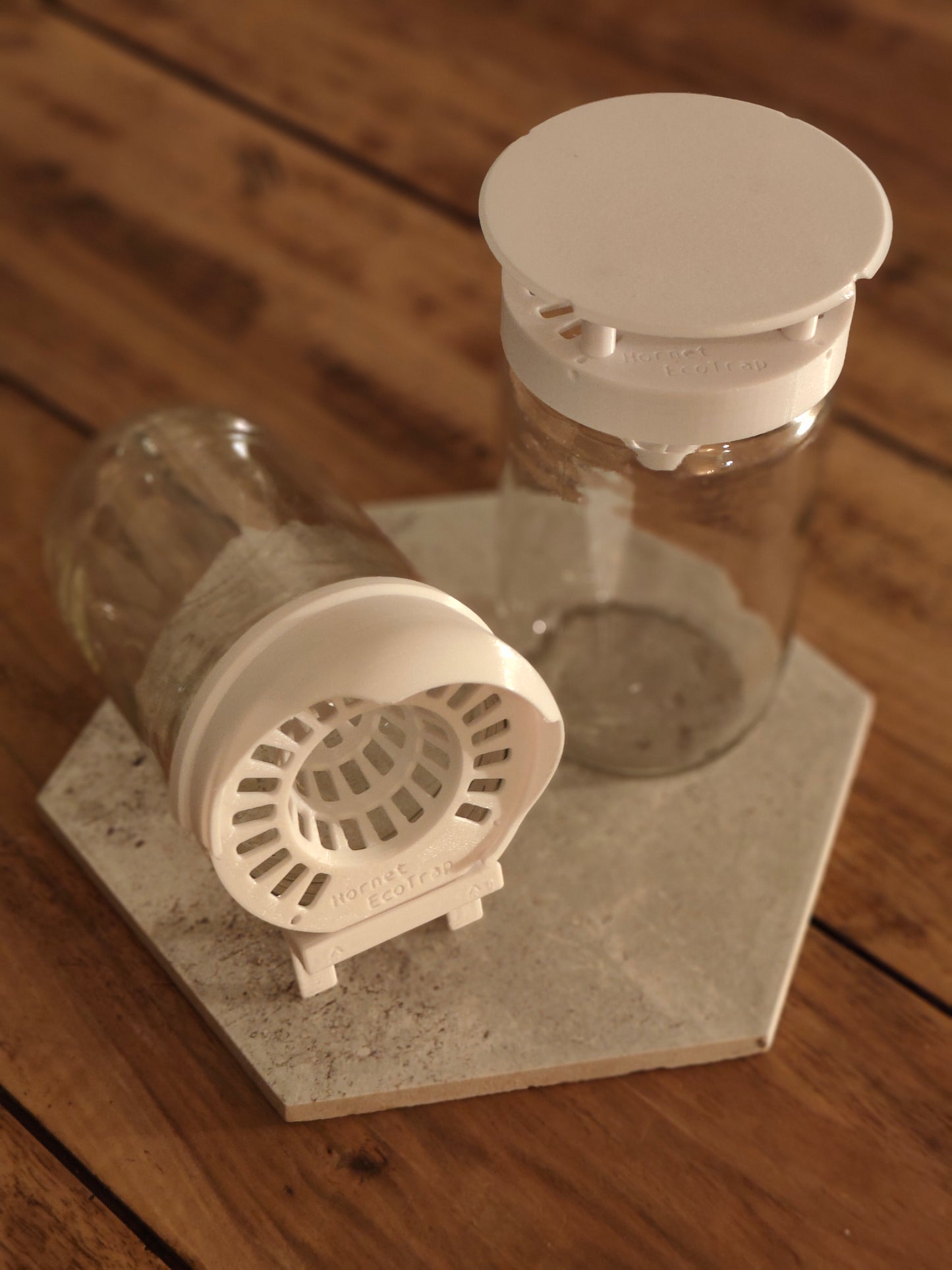
Selective hornet trap for private individuals
Discover our selective hornet trap . Simple to install and harmless to other insects, it helps you preserve your outdoor space while remaining respectful of nature.
The fight against the Asian hornet concerns us all
The Asian hornet adapts very well to urban and suburban environments . It frequently builds its nests in places close to human habitation: garden trees, hedges, sheds, eaves or attics.
This proximity increases the risk of unintentional encounters with the occupants of the dwelling.
-
Risk if a nest is located near the dwelling
The presence of an Asian hornet nest in a garden tree, under a roof or in a shelter greatly increases the danger, as any unintentional approach can provoke a collective reaction from the hornets.
-
Nuisances during outdoor activities
This creates a situation of constant stress for the occupants, who may fear moving freely around their house or balcony.
-
Risk of multiple stings
Although the Asian hornet is not aggressive by nature, it may attack in groups when its nest is threatened. This poses a real risk of stings , with potentially serious consequences in the case of multiple stings.
-
Danger to children and animals
Children, attracted by insects, and pets, often curious, are more likely to approach a nest or try to catch a hornet. This unintentional proximity increases the risk of a group attack.
The selective and effective Hornet EcoTrap trap
The Hornet EcoTrap helps limit the presence of Asian hornets around your home and thus reduces the risk of stings. By taking preventative action, you can enjoy your garden, balcony, or patio more peacefully. It's a simple solution for creating more tranquil outdoor spaces while contributing to responsible prevention efforts.
The tangible benefits of trapping for individuals
Trapping is a simple solution to limit the presence of Asian hornets around your home. It's an environmentally friendly method for reducing the threat of Asian hornets without disrupting the local ecosystem.
Reducing the presence of hornets in the garden and on the terrace
Installing a selective trap helps to reduce the movement of hornets in outdoor living areas, making time spent in the garden more peaceful.
Take preventative action before a nest appears
Trapping in the spring allows you to capture queen wasps and reduce the risk of a nest being established near your home. Make sure you set the traps correctly for maximum effectiveness.
Securing the environment for children and animals
By limiting the presence of hornets around your home, you reduce the risk of accidental stings while playing in the garden or doing gardening work. Protect your family and friends by limiting the attraction of hornets near your home.
An accessible and easy-to-use solution
The Hornet EcoTrap selective trap is easy to install , without technical skills, and constitutes a first concrete action to feel less helpless in the face of the problem.
Hornet EcoTrap
Trap for asian hornet - Hornet EcoTrap
Share

Trapped hornets, peaceful barbecues, and protected biodiversity.
-
Where should I install a trap in a garden or around the house?
Choosing the right location for the trap is essential for it to be effective without causing a nuisance:
- Place the trap away from frequently used areas (terrace, children's play area).
- Choose quiet areas of the garden, near hedges or areas where hornets pass.
- Avoid installing it too close to windows or doors so as not to attract hornets to the house.
A good location allows you to capture hornets on the periphery of the living area.
- Place the trap away from frequently used areas (terrace, children's play area).
-
A responsible action for the biodiversity of the garden
Many people want to take action against the Asian hornet without harming other beneficial insects in their garden. Using a selective trap and appropriate bait helps limit unwanted captures (bees, butterflies, bumblebees). This reasoned approach helps protect one's living environment while respecting local biodiversity .
Frequently Asked Questions
What should I do if I regularly see Asian hornets in my garden?
Seeing Asian hornets repeatedly in your garden may indicate the presence of a nearby nest or a frequently used flight path. It's advisable to observe their flight paths from a distance to identify any regular routes, without approaching them. Setting up targeted traps around the perimeter of the garden can help reduce their presence and limit the nuisance they cause around the house.
Read our guide When and how to use a trap effectively .
Is trapping dangerous for children and pets?
A trap that is properly installed and placed out of the direct reach of children and animals poses no particular danger. It is recommended to position the trap in a quiet area of the garden, away from play areas and walkways. Responsible installation helps control Asian hornets while maintaining a safe environment for the family.
Can I destroy an Asian hornet nest myself in my home?
It is strongly advised against attempting to destroy an Asian hornet nest yourself. Without proper equipment and training, the risk of multiple stings is high, as hornets actively defend their colony. The safest solution is to report the nest to the local council or call in a professional specializing in hornet nest removal.
Read our guide : Spotting, reporting and destroying an Asian hornet nest .
At what time of year should action be taken against the Asian hornet around the house?
Spring is a crucial time to take action, as this is when queen wasps emerge from hibernation to establish new nests. Setting traps as soon as temperatures begin to rise helps limit the establishment of colonies near homes. In summer and autumn, vigilance remains important to quickly identify a nest in formation.
Is trapping enough to prevent a nest from appearing near my home?
Trapping is a useful preventative measure, but it does not guarantee the complete absence of nests. It must be complemented by regular monitoring of the garden and the area around the house , as well as by the prompt reporting of any nests spotted. This combination of actions significantly reduces the risk of the Asian hornet establishing a permanent presence near the home.